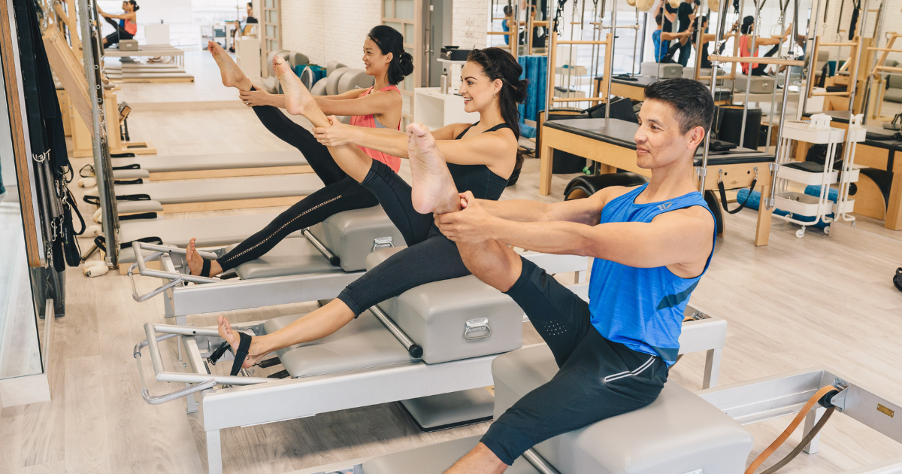
Improving your range of motion with classical Pilates is one of the most effective ways to build a flexible, strong, and resilient body that moves with ease in everyday life and in sport.
Why Range of Motion Matters
Range of motion is the ability of a joint to move through its full, natural arc without pain or restriction. Healthy range of motion reduces injury risk, supports better posture, and keeps you mobile for daily tasks like lifting, bending, and reaching. As we age, tight hamstrings, hip flexors, and upper-back muscles often limit movement, which can create stiffness and discomfort in the lower back, neck, and shoulders. Classical Pilates directly addresses this by pairing controlled stretching with strength work, so your joints are both mobile and supported.
Pilates for Flexibility and Mobility
Unlike passive stretching, classical Pilates builds flexibility and strength at the same time, which is key for long-term mobility and joint stability. Many exercises are designed to lengthen tight muscles (like hamstrings and hip flexors) while activating the core and postural muscles that protect your spine. This balanced method makes classical Pilates ideal whether you are a serious athlete or simply want to move more comfortably in daily life.
Key flexibility benefits of Pilates
- Increases functional range of motion in major joints.
- Reduces stiffness in the spine, hips, hamstrings, and shoulders.
- Supports better posture and alignment for work and sport.
- Combines mobility, stability, and mindful breathing in one session.
Best Pilates Exercises to Improve Range of Motion
1. Hamstring Stretch on the Reformer
Tight hamstrings are one of the most common causes of lower-back and hip stiffness. On the Pilates reformer, you lie on your back with feet on the footbar, then press the carriage away as you extend your legs, gently flexing and pointing the feet to lengthen the back of the legs. The spring resistance supports your body so you can safely deepen the stretch while maintaining alignment.
2. Cat–Cow Stretch
This classic Pilates spinal mobilizer improves flexibility through the entire back, shoulders, and hips. From a tabletop position, you alternate between arching the spine (Cow) as you lift the chest and tailbone and rounding the spine (Cat) as you draw the belly in and tuck the chin. Moving slowly with your breath for 8–10 cycles help ease stiffness in the lower back and upper spine.
3. Pilates Roll-Up
The Roll-Up is a powerful core and mobility exercise that lengthens the entire back line of the body. Lying on your back with legs long and arms overhead, you exhale to curl up and roll through the spine one vertebra at a time, reaching toward your toes, then inhale to reverse back down with control. This builds abdominal strength while stretching the spine and hamstrings for greater flexion and reach.
4. Shoulder Bridge
Shoulder Bridge opens the front of the hips and strengthens the backside of the body, which is essential for a balanced, flexible spine. Starting on your back with knees bent and feet hip-width, you press into the feet to lift the hips, creating a straight line from shoulders to knees, hold briefly, then lower with control. This movement stretches the hip flexors and lower back while engaging glutes and core for better support and range of motion.
5. Saw
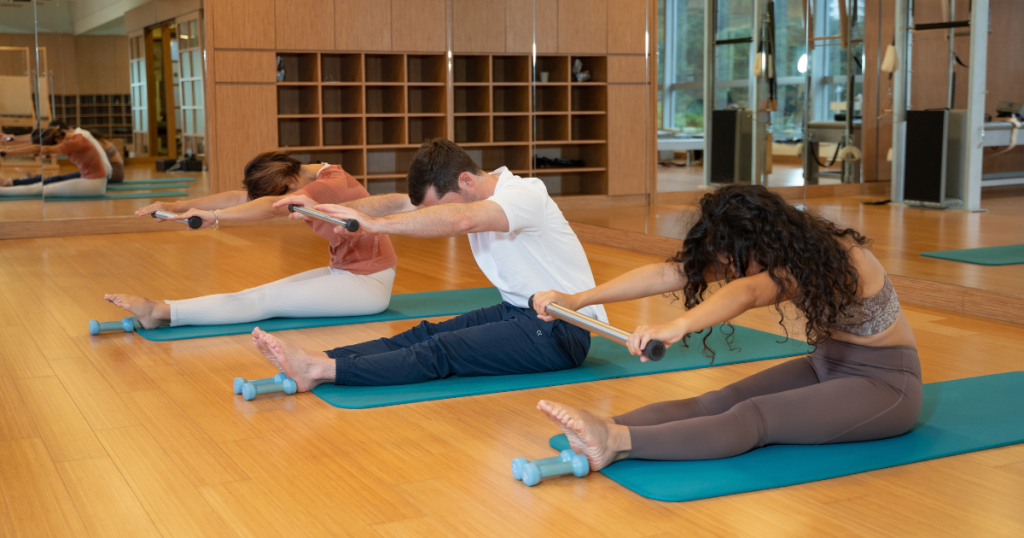
The Saw combines hamstring stretching with spinal rotation for three-dimensional mobility. Sitting tall with legs wide and arms out to the sides, you twist from the waist and reach the opposite hand toward the opposite foot, then return to center and switch sides. This exercise lengthens the hamstrings, improves rotational flexibility in the spine, and challenges shoulder mobility.
6. Standing Side Stretch
Standing Side Stretch targets lateral flexibility in the spine, ribs, and hips. With feet hip-width and arms reaching overhead, you lengthen upward, then arc to one side, keeping both hips squared and the body in one long line. Holding for a few breaths before switching sides helps increase side-body length and lateral range of motion.
A Balanced Approach: Strength + Flexibility
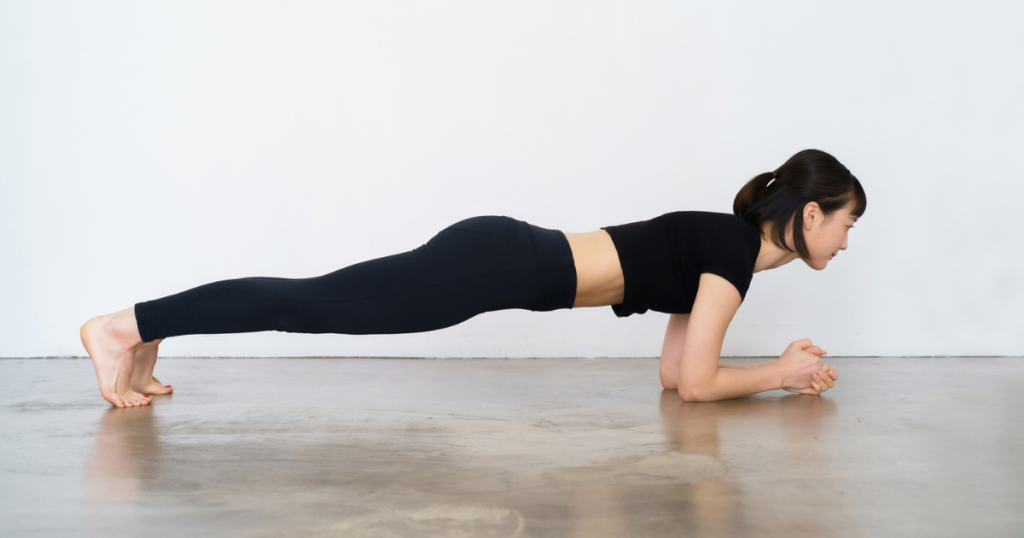
To truly improve range of motion, flexibility work must be paired with strength so the joints remain stable as they move more freely. In Pilates, core-focused exercises like the Hundred and Plank build deep stability while supporting spinal mobility and healthy alignment. This integrated approach lowers injury risk and makes your new flexibility usable in real life whether you are running, lifting, or simply carrying groceries. Consistent practice of these targeted classical Pilates exercises can lead to better posture, more fluid movement, and a body that feels both open and strong.
To start improving your range of motion, it helps to learn these classical Pilates fundamentals in a supportive, hands-on environment. Book your trial or a private assessment today and experience how consistent Pilates can transform your mobility, ease pain, and help you move with more confidence and freedom.
CENTRAL
3/F Man Cheung Building, 15-17 Wyndham Street Central
WhatsApp +852 5740 5103
ONE ISLAND SOUTH
2205 & 2209 One Island South, 2 Heung Yip Road Wong Chuk Hang
WhatsApp +852 5740 9420
ORCHARD
390 ORCHARD ROAD, PALAIS RENAISSANCE #05-02 S238871
WhatsApp +65 9016 3539